



How long does a hot water tank last? Signs it is time to replace it, and tank vs tankless
Most hot water tanks last about 8 to 12 years. The signs yours is near the end, when a repair still makes sense, and how a tank compares with tankless.
Most hot water tanks give little warning before they fail, and when they do, it is often a puddle on the floor. Knowing roughly how old your tank is, and what to watch for, lets you replace it on your schedule instead of in a hurry.
How long does a hot water tank last?
Most standard hot water tanks last about 8 to 12 years. Some go longer, some fail sooner. It depends on:
- whether the tank is gas or electric
- how much hot water your household uses
- whether the tank has been maintained (draining sediment, replacing the anode rod)
Tankless water heaters usually last longer: many keep working for 15 to 20 years with regular maintenance.
Not sure how old your tank is? Check the label for the manufacture date. If it isn’t clearly printed, check the serial number using the manufacturer’s guide.
Signs your hot water tank needs replacing
- Water around the base. If it is safe to do so, turn off the tank's electricity or gas and its water supply, then call a plumber. A leak from the tank itself cannot be repaired, but a leaking fitting or valve often can be.
- Rusty or brown hot water. Rust in the hot water only often means the inside of the tank is corroding.
- Rumbling or popping sounds. Sediment has built up at the bottom, so the tank works harder and heats less.
- Not enough hot water, or hot water that runs out faster than it used to.
- The tank is past 10 years old and starting to show any of the signs above.
Repair or replace?
Some problems are worth fixing: a leaking fitting or valve, a faulty thermostat, a heating element on an electric tank, a pilot or burner issue on a gas tank, or a worn anode rod on a younger tank. If the tank itself is leaking, or it is near the end of its expected life, replacement is usually the better use of your money.
Tank or tankless?
A hot water tank
- costs less to buy and install
- stores hot water, so it is ready when you turn on the tap
- can run out of hot water when several people shower back to back
- takes up floor space
A tankless water heater
- heats water as you use it, giving continuous hot water within its capacity; how many taps run at once and how cold the incoming water is affect how much it can deliver
- mounts on the wall and frees up floor space
- usually lasts longer than a tank
- costs more up front, and often needs changes to the gas line or venting
The right choice depends on your household, your space and your gas and venting setup. We can look at your current installation and tell you what each option would involve.
Permits for gas water heaters in BC
Gas work in BC is regulated by Technical Safety BC (TSBC). Within TSBC's jurisdiction, a like-for-like replacement of a residential water heater rated 50,000 BTU/h or less, with no changes to the gas piping or venting, may use a replacement decal. Switching to a gas tankless water heater requires a gas installation permit. Your municipality may have its own requirements too.
On our gas installations, the licensed gas contractor responsible for the work handles the required gas permit or eligible replacement decal and checks the municipal requirements.
Replacing your hot water tank with Prosafe
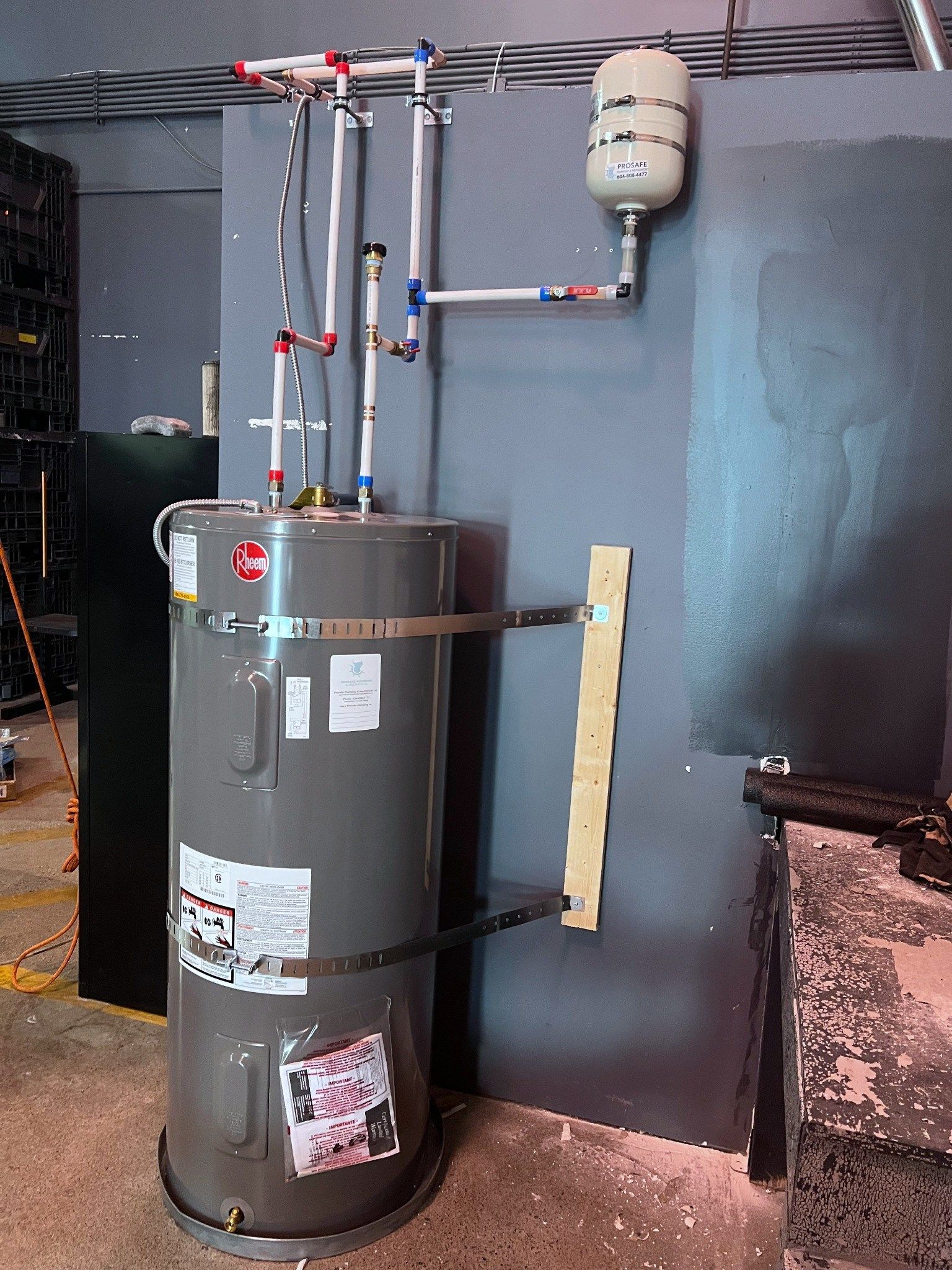
Our hot water tank installations include standard removal and disposal of your old tank. We install hot water tanks and tankless water heaters across North Vancouver, West Vancouver and the Lower Mainland.
See our services or ask us about replacing your hot water tank.